

Part I
After the assassination of Archduke Franz Ferdinand on June 28 1914, Austria-Hungary declared war on Serbia July 28, 1914. As Serbia’s ally, the Czarist Russian Empire, CRE, began general mobilization on July 30, 1914, to deter Austria-Hungary from attacking Serbia. Germany demanded Russia cease mobilization, and upon refusal, declared war on the CRE on August 1, 1914.
The CRE army, despite its large size, suffered from poor leadership, inadequate equipment, and poor morale, leading to significant losses in battles. In 1914, the military faced two major defeats, resulting in about 250,000 soldiers being killed, wounded, or captured. The military failures contributed to growing civilian anger and dissatisfaction with the CRE regime. Social unrest in major cities led to the collapse of the CRE. Czar Nicholas II stepped down on March 15, 1917. Read Dr. Zhivago by Pasternak.
Germany and Soviet Russia, successor of CRE, signed the Treaty of Brest-Litovsk, on March 3, 1918, which ended Russia’s involvement in the war. This enabled Germany to transfer forces to the trench war in France, to counter the arrival of the American Expeditionary Force.
Germany and Soviet Russia, successor of CRE, signed the Treaty of Brest-Litovsk, on March 3, 1918, which ended Russia’s involvement in the war. This enabled Germany to transfer forces to the trench war in France, to counter the arrival of the American Expeditionary Force.
The treaty forced Russia to cede vast territories, including Poland, Finland, Ukraine, Belarus, the Baltics (Estonia, Latvia, Lithuania), to Germany, and Caucasian lands (Kars, Ardahan, Batum) to the Ottoman Empire, resulting in losses of population 34%, industry 54%, coal 89%, and agricultural land 32%, effectively ending Russia’s WW I participation. Those losses were reversed and the treaty was nullified as part of the overall WW I settlement in Versailles.
The French and UK were facing Germany in a trench war in France. Both sides were in a 4-year stalemate. The US declared war on Germany on April 6, 1917, but an over-2-million American Expeditionary Force, AEF, did not arrive until the spring and summer of 1918, which, after some battles, led to an Armistice on November 11, 1918
The Paris Peace Conference (1919-1920) was held in Versailles to finalize terms after WW I. This culminated in the Treaty of Versailles with Germany on June 28, 1919, which severely punished Germany, such as ceding 13% of its European lands, including Alsace-Lorraine to France, and all colonies, no air force, no submarines, no heavy weapons, army limit at 100,000), and reparations for war damage.
NOTE: Poland did not exist as a state from 1795 to 1918. The Second Polish Republic emerged on November 11, 1918; Versailles recognition in June 1919; borders internationally recognized by 1923. After WW II, Poland lost eastern and southern lands, which were added to the Belarus SSR and Ukraine SSR, and gained western lands, which were taken from Germany. The next images show Poland in 1933 and 1945. Note the position of Minsk wrt the border in both images. In the 1945 image, Poland gained the southern part of East Prussia with seaport Gdansk and Russia the northern part, now called Kaliningrad.
Poland is militarizing and war-mongering to recover eastern lands, but Belarus has at least 60, Mach-10, nuclear bombs missiles with a range of about 3100 – 3400 miles, covering all of Europe.
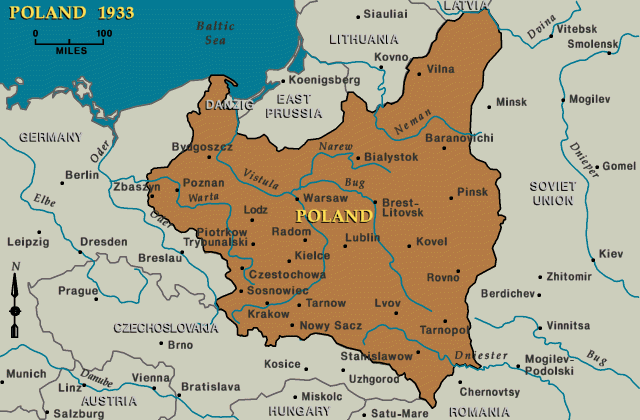
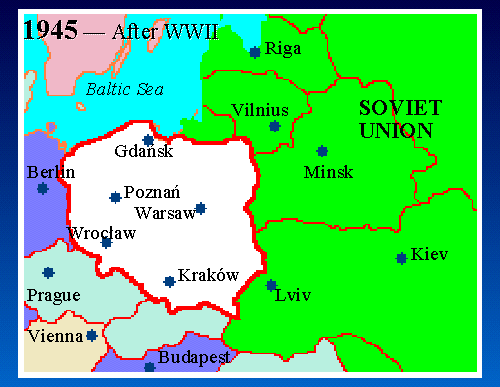
NOTE: Ukraine nationalists, eager to take advantage of civil war chaos in Soviet Russia, proclaimed the Ukrainian People’s Republic, UPR, in 1918. Proclaiming a state is one thing, getting international recognized is quite another.
NOTE: The Ukraine nationalists presented their Ukraine map at the Paris Peace Conference which made grossly excessive claims on Russian sovereign territories, as shown below. They claimed all Russian territory as part of the UPR, wherever Cossacks were a majority. The Allied Powers rejected the claims and did not recognize the UPR, i.e., the Ukraine area remained a part of Russia until August 24, 1991.
NOTE: Prior to 1991, 1) Ukraine had never existed as an independent, sovereign state; 2) No official documents exist referring to Ukraine as an independent, sovereign state; 3) That area had been a sovereign part of Russia since at least 1775, as explained below; 4) Ukraine is a Russian word for “lands near the border” of Poland.
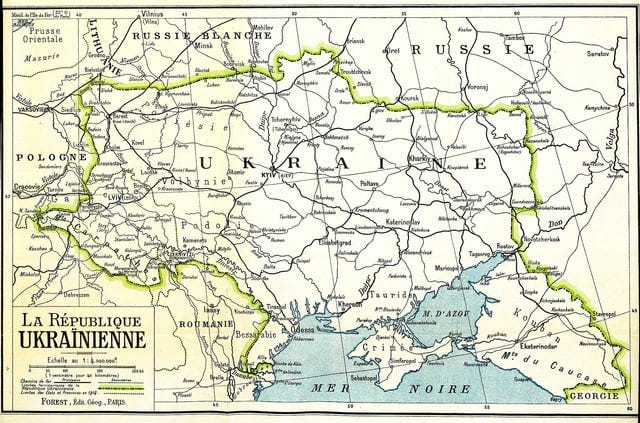
The Reds vs Whites and Expeditionary Intervention Forces
The Reds (Bolsheviks) consolidated control of the territory of the former CRE, by defeating the Whites (Czarists), who were supported by at least 200,000 Expeditionary Intervention Forces, EIF, from many countries, which tried to reinstall the Czarist Regime.
At first, the EIF claimed it had the “noble” aim of reinstalling the much-hated Czarist regime. However, Czar Nicholas II and his family were executed by the Reds on the night of July 16-17, 1918, in Yekaterinburg, Russia.
Did the EIF go home in 1918? The EIF did not go home until 1925, because their real aim was to: 1) strategically weaken Russia during 1918 to 1925, 7 years; 2) install a puppet regime in Moscow; 3) break Russia apart in seven or so regions; 4) take over its vast natural resources. See Part IV at end of article.
The Soviet Era and How Ukraine was Created in the 1900s
The Russian Soviet Federative Socialist Republic, RSFSR, was founded as a socialist state, from 1917 to 1922
The entire Ukraine area was incorporated as part of the RSFSR in 1919 with Kharkiv as its capital.
In 1922, the RSFSR was replaced by the USSR. The Reds set up a government structure with Soviet Socialist Republics, SSRs, growing to 15 by 1956, called Union of Socialist Soviet Republics, USSR, including the Central Executive Committee of the USSR, CEC, established in 1922 during the First All-Union Congress of Soviets, with Kalinen as Chairman. The CEC was replaced by the Presidium of the Supreme Soviet in 1938.
The CEC (and its successor Presidium of the Supreme Soviet) was the only entity with sovereign powers. It had sovereign power over all 15 SSRs. It could determine/alter SSR borders, as needed, have control of all armed forces, deal with foreign governments, have embassies and consulates.
The CEC/ Presidium established the borders of the Ukraine SSR in 1922, with Kharkiv remaining as its capital until 1934. Kiev was the capital of the Ukraine SSR from 1934 to 1991.
USSR Lands added to Central and Eastern Ukraine SSR
The USSR transferred a part of the lands of the former Crimean Tartar Khanate), which gave the Ukraine SSR access to the Black Sea.
It placed the Azov Sea area under joint control with the Ukraine SSR
It added Crimea to the Ukraine SSR in 1954, as part of the 300-y celebration of the history-changing Pereiaslav Treaty of January 1654. See Part III
USSR Lands added to Western Ukraine SSR
Western Ukraine is mostly made up of lands ceded by various countries to the USSR:
1) Poland ceded Eastern Galicia and Volhynia to the USSR by treaty in 1939
The USSR added those lands to the Ukraine SSR in 1939
2) Czechoslovakia ceded Transcarpathia to the USSR by treaty in 1945.
The USSR added it as Zakarpattia Oblast to the Ukraine SSR in 1946
3) Rumania ceded Bessarabia and northern Bukovina to the USSR.
The USSR added those lands to the Ukraine SSR in 1940 and 1948
The Ukrainian SSR (which was not a sovereign, independent state) was created by putting together various Russian lands, which, by 1991, had been sovereign parts of Russia for at least 1991 – 1783 = 206 years.
The Ukrainian SSR remained within the USSR until the Ukraine nationalists declared independence on August 24, 1991, which was affirmed by a referendum on December 1, 1991, with 90% of voters supporting independence.
NOTES:
The 90% was likely due to Ukrainians thinking Russia would be similar to the USSR, which turned out not to be the case, especially after Putin became President on 7 May, 2000, after the disastrous/chaotic rule of Gorbachev/Yeltsin, who resigned, and told Putin to “Take care of Russia”, which he did by 1) liberalizing Russia, 2) creating a strong defense of Russia, 3) limiting Western activities in Russia, 5) aligning with China and India, and 6) creating BRICS, a growing alliance of like-minded nations.
If a Presidential election were held in Ukraine in the near future, the EU likely would have several hundred voting stations in West Europe, etc., to enable 7 million expatriate Ukrainians to vote, but allow only a few stations in Russia, to enable 6.5 million expatriate Ukrainians to vote, as was done during the recent Moldovan Presidential elections, to ensure the “right” President would “win”.
Ukraine finally became an independent, sovereign state at the end of 1991
Part II
US/Europe NATO Expansion to Russian Borders and to Former SSRs
After the USSR-led Warsaw Pact collapsed on July 1, 1991, US/Europe used NATO and the EU to:
1) Gradually advance NATO military power to Russia’s borders and to former SSRs, despite US and German promises given to President Gorbachev not to expand NATO “one inch” beyond east Germany, while ignoring the objections of Russia, and
2) Gradually advance EU commercial/political influence (selling/producing goods and services and making rules and regulations) into East European countries to Russia’s borders and to former SSRs.
3) Engaged in various regime change operations, aka Color Revolutions, in various countries, such as Yugoslavia, Ukraine, Belarus, Kazakhstan, Kyrgyzstan, Georgia, Moldova, etc.
Ukraine Color Revolutions
During 2004/2005 was the first US/Europe-led/financed/organized Color Revolution in Ukraine, which installed pro-West Yushchenko as President for 5 years.
During 2010, pro-Russian Yanukovych, from the city of Donetsk, became President. The Central Election Commission and international observers declared the presidential election was conducted fairly.
During 2013/2014, was the second US/Europe-led/financed/organized Color Revolution in Ukraine, which resulted in pro-West Poroshenko as President, a Ukraine oligarch.
The CIA used USAID as a front to finance the coup d’etat in Kiev in 2014. Just one month before the coup, a leaked call on You-tube between Victoria Nuland and the US ambassador Pyatt exposed they were discussing the merits of the people to serve in Ukraine’s provisional cabinet. The Kiev coup was another violent attempt to further extend Western influence, by the EU and NATO, often by force, to Russia’s borders. The coup violently ousted the Democratically elected President Yanukovych on February 22, 2014 (he had to flee to save his life), and caused 116 dead, plus 184 with gunshot wounds, plus 760 with bodily injury. “Mostly peaceful”, per the Western Corporate Media.
The provisional cabinet was replaced after elections were held. Poroshenko became president from 7 June 2014 to 20 May 2019. The government soon morphed into a clique of Russia-hating, radical, nationalists. The Ukraine Armed Forces, UAF, attacked East Ukraine from 2014 to 2022 (8 years), inhabited by mostly ethnic Russians for at least 300 years, who did not want to be ruled by Kiev.
For eight years (2014 - 2022), the extremist Kiev regime, with US/EU/UK indulgence, freely killed and seriously wounded ethnic-Russian civilians in the Donbas and other areas. From 2014 to February 22, 2022, there were 3,404 civilians were killed and at least 7,000 were wounded. The military deaths were about 4,500 Ukraine Armed Forces and about 6,500 ethnic-Russian Separatists, plus seriously wounded and MIA on both sides, per OSCE.
On May 2, 2014, in Odesa, founded by Czarina Catherine the Great in 1793, where 48 people were killed/burned to death in a multi-story building. Ukraine troops allowed no one to escape. The ethnic-Russian people did not want to be ruled by the extremist Kiev regime. https://www.peoplesworld.org/article/the-odessa-trade-union-massacre-ten-years-later/
Russia assisted the East Ukrainians with armaments to better defend themselves against the UAF.
During 2019, Zelensky, with backing of Ukrainian oligarch Ihor Kolomoisky, was elected President, after campaigning to 1) end the conflict in Donbass and 2) tackle endemic corruption.
But like his predecessors, he did not heed the interests of the people, but the interests (red lines) of a clique of Russia-hating, radical, nationalists, some of whom corruptly enriched themselves feasting on US/EU funds.
Ukraine oligarchs, with near-total ownership/control of the Media, bought the votes of many delegates in the Verkhovna Rada (Parliament) to continue endemic corruption. A 2025 Gallup poll indicated 85% of Ukrainians believe corruption is widespread throughout their government.
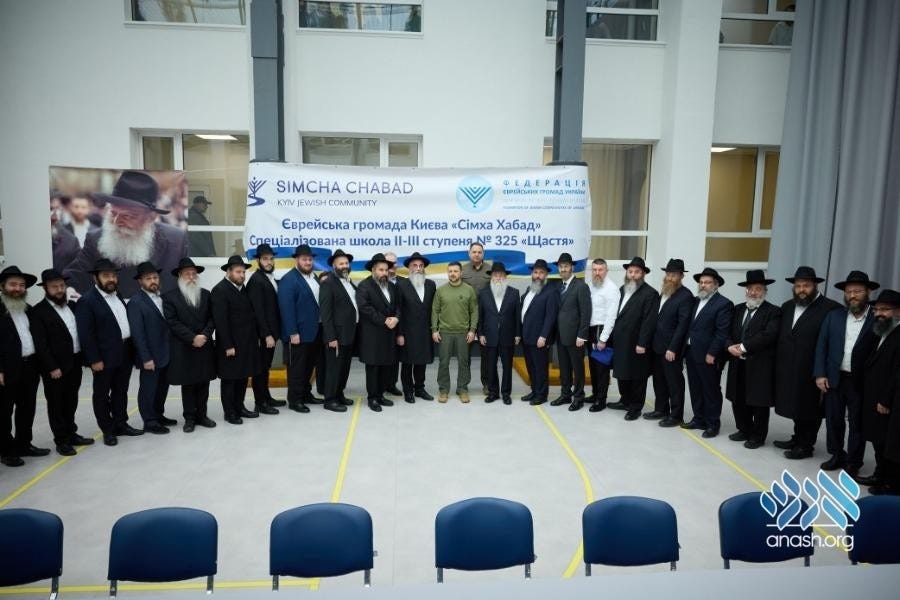
NOTE: Zelensky; Oligarch Kolomoisky; Former Chief of Staff, Andriy Yermak (involved in corruption); Former business partner who fled to Israel, Tymur Mindich (involved in major corruption); Volodymyr Groysman, the former prime-minister, Hennadiy Korban, Vadim Rabinovich, Hennadiy Kernes, Pavel Fuks, Alexander Feldman, Oligarch Victor Pinchuk, Zvi Hirsch Bogolyubov, Hryhoriy Surkis, Igor Surkis, almost all with Ukrainian and Israeli nationality. Israel extradites no one!
Fourth Attempt to Weaken/Control Russia
US/Europe elites/neocons have inflicted on Russia three historic, divide/conquer attempts: 1) the Napoleon Campaign, 2) the Expeditionary Force Intervention, and 3) the Hitler Campaign, all of which came to naught. https://willempost.substack.com/p/europes-decline-from-a-lofty-perch
The planning for the fourth attempt started decades before 1991.
1990 - 2000, US/EU attempt to take over Russia during the Disastrous Gorbachev/Yeltsin Era
The USSR collapsed in 1991, which led to the US, the Cold War victor, advising Russia how to become a capitalist country. The net result was the rise of Russian Oligarchs, such as Berezovsky, Gusinsky, Khodorkovsky, Potanin, Fridman, Abramovich, Derispaska, and a few dozen others, many with close links to western companies and financial entities.
Berezovsky and Gusinsky bought most of the Russian Media to influence the Russian people, during the turbulent, chaotic Gorbachev/Yeltsin era of the 1990s.
The oligarch’s objective was to take over the Presidency of Russia, take control of Russia’s natural resources by hook and crook and selling them to major western corporations.
Hundreds of $billions were extracted from Russia, much of it parked in foreign banks, such as in New York, London, Montreal, Paris, etc., and in tax havens.
Yeltsin tried preventing this robbery by selecting Putin as his acting Prime Minister on August 9, 1999 (confirmed on 16 August 1999).
Yeltsin, in poor health, resigned at the end of 1999, and appointed Putin as acting President. Putin was neither a Communist, nor in league with the Oligarchs. He told Putin: “Take care of Russia”. Putin, a true Patriot, was overwhelmingly elected President in March 2000.
That wholesale robbery came to a screeching halt after Putin was elected President. He quickly established many new rules, such as reigning in the Oligarchs and in-grown, stale bureaucracies, which revitalized the economy.
One of his acts was to tell all oligarchs they could keep their $billions but they had to stay out politics. In a meeting, he made 18 of them sign a document. It was recorded on a video. Just google. Then the oligarchs began to slime Putin using their Media, even trying to kill him several times, but the People responded by overwhelmingly supporting Putin for decades.
After Putin became President, Russia, in existential mode, did not cave, but like a Phoenix, rose from the ashes, much to the dismay of the hubristic, Russophobic neocons in the West, such as “inane-no-brain” McCain, who disdainfully portrayed Russia as a “gas station”.
In 2021, Russia became the 4th largest economy, based on purchasing power parity, PPP. Read “The Plot to Seize Russia”, by Martin Armstrong.
This was the fourth attempt by the western elites to take over the resources of Russia.
Fifth Attempt to Weaken/Control Russia
US/Europe deliberately installed the clique of corrupt, Russia-hating, Bandera/NAZI-idolizing, radical Nationalists in Kiev, in 2014. The Ukraine Armed Forces, UAF, attacked East Ukraine from 2014 to 2022 (8 years), inhabited by mostly ethnic Russians for at least 300 years, who did not want to be ruled by the extremist clique in Kiev.
After 2025, the “Coalition of the Willing” (mostly the UK, France and Germany, former colonial powers), hoping to extract wealth from Russia during future years, would be using:
1) At least $100 billion in EU loans to help Ukraine to keep on fighting and dying during 2026 and 2027, and
2) The NATO-trained/armed Ukraine Armed Forces, UAF, reinforced with “mercenaries from NATO and other countries”, and “instructors from NATO countries”, and “private military companies of France”, and NATO naval forces in the Black Sea, and likely a future NATO naval base in Odessa (right next to Russia’s naval base in Crimea established in 1783), to “police a future ceasefire on land, air and sea”, per Rutte, after a ceasefire has been agreed upon, which may take many months of “negotiating”.
However, Russia has repeatedly stated its security requirements will not tolerate any NATO forces anywhere in Ukraine, i.e., located about 1000 km closer to Moscow.
3) The hope in US/EU capitals remains to strategically weaken Russia during the next few years, install a puppet regime in Moscow, break Russia apart in five or so regions, and take over its vast natural resources, preferably without NATO’s expensive, “boots-on-the ground” involvement.
The US/Europe would in the meantime: 1) provide the UAF with low-cost/low-risk targeting/guidance/control/real-time battlefield info, 2) impose additional sanctions, 3) impose increased longer-range hits on Russian targets, 4) capture many oil tankers, etc., to get Russia to submit to western diktats.
Russia, the Gas Station
Russia the “gas station,” under the most comprehensive sanctions regime in modern history, now ranks as the fourth-largest economy in the world by purchasing-power parity, PPP.
However, the war-mongering UK, 1) uncompetitive with an antiquated industrial base, 2) an economy in zero-growth mode and stagnant/declining real incomes, 3) with subsidized wind/solar/batteries systems producing expensive electricity, 4) beset by millions of indigenous-culture-destroying, mostly Muslim walk-ins/float-ins/fly-ins from all over: a) cannot publish a defense investment plan on time; b) cannot field a functioning armored vehicle without injuring its own troops; c) has an economy that cannot sustain rearmament in spite of private finance gimmicks and accounting contortions; d) has a political class that cannot reconcile its war talk with its industrial capacity; e) increasingly resembles a heritage museum, complete with a gift shop, living off past colonial glories while subcontracting its future to others.
Wars are won by output — steel, shells, access to critical minerals, drones, logistics, and the brutal arithmetic of industrial throughput.
Russia’s military-industrial base, bureaucratically compressed, hardened, and scaled under pressure, now outpaces NATO’s collective ammunition production by a multiple.
In sum, while Russia produces, the UK 1) reviews glorified mission statements; 2) delays indefinitely out of impotence; 3) Russia fields game-changing adaptations learned from battlefield within months, while the UK commissions another inquiry.
Crimea and Four Provinces in East Ukraine
The Crimean people (Ethnic-Russian, 65%; Ukrainian, 25%; Tartar, 10%) voted to rejoin Russia by about 97%. After the vote, the Crimean Parliament voted for Crimea to rejoin Russia on March 6, 2014. The Russian Parliament enacted a law and Putin signed it on March 21, 2014, to officially have Crimea be a part of Russia again.
In April 2014, the US/EU-installed clique in Kiev cut off the water and electricity supply to Crimea. Russia replaced these supplies.
The people of Luhansk, Donetsk, Kherson, Zaporizhia voted by about 90% to rejoin Russia. Russia agreed on February 21, 2022, to officially have these provinces be a part of Russia again, after which Putin stated the Minsk agreements were no longer in effect. This was followed by Russia’s invasion of Ukraine on February 24, 2022, in response to the UAF having amassed over 100,000 troops at the military borders of the Donbass and increasing its artillery firing rate by 3-4 times in early February.
Russia Wants Ukraine to be Neutral and Non-aligned
Former Prime Minister of Lithuania, Andrius Kubilius, the European Commissioner of Defense and Space, is working on a “European Defense Readiness Roadmap by 2030”. He views Ukraine as a critical component of building a viable “European Defense Union”, especially due to potential future changes in the US role in European security.
Kubilius advocates for the seamless integration of Ukraine’s 800,000-strong armed forces and its defense industry into EU plans and projects, including joint procurement and the development of shared military technology.
NOTE: How does that square with Ukraine being neutral and non-aligned, and not a part of NATO? Can Ukraine afford standing armed forces of 800,000? Germany, France and Italy are aiming for 203,000, 210,000, 169,000, by about 2030, respectively. https://www.dw.com/en/germany-armed-forces-bundeswehr-eu-defense-spending-nato-trump/a-72570394
NOTE: Because the EU increasingly acts in tandem with the European part of NATO, if Ukraine were in the EU, it would become a major part of the “European Defense Readiness Roadmap by 2030”, intended to be an EU military entity acting independently of NATO.
NOTE: Most EU nations joined for economic reasons. They never voted for military campaigns, or for being forced to take tens of millions of mostly Islamic refugees that destroy their indigenous cultures; the UK, Germany, France, Spain, Italy, etc., come to mind. The EU is beginning to disintegrate as decisions made in Brussels are increasingly ignored by member states, who are divided between advocates of war and of peace.
Almost the entire area of the eight Provinces of East Ukraine and Crimea were part of Russia before the US Constitution was written.
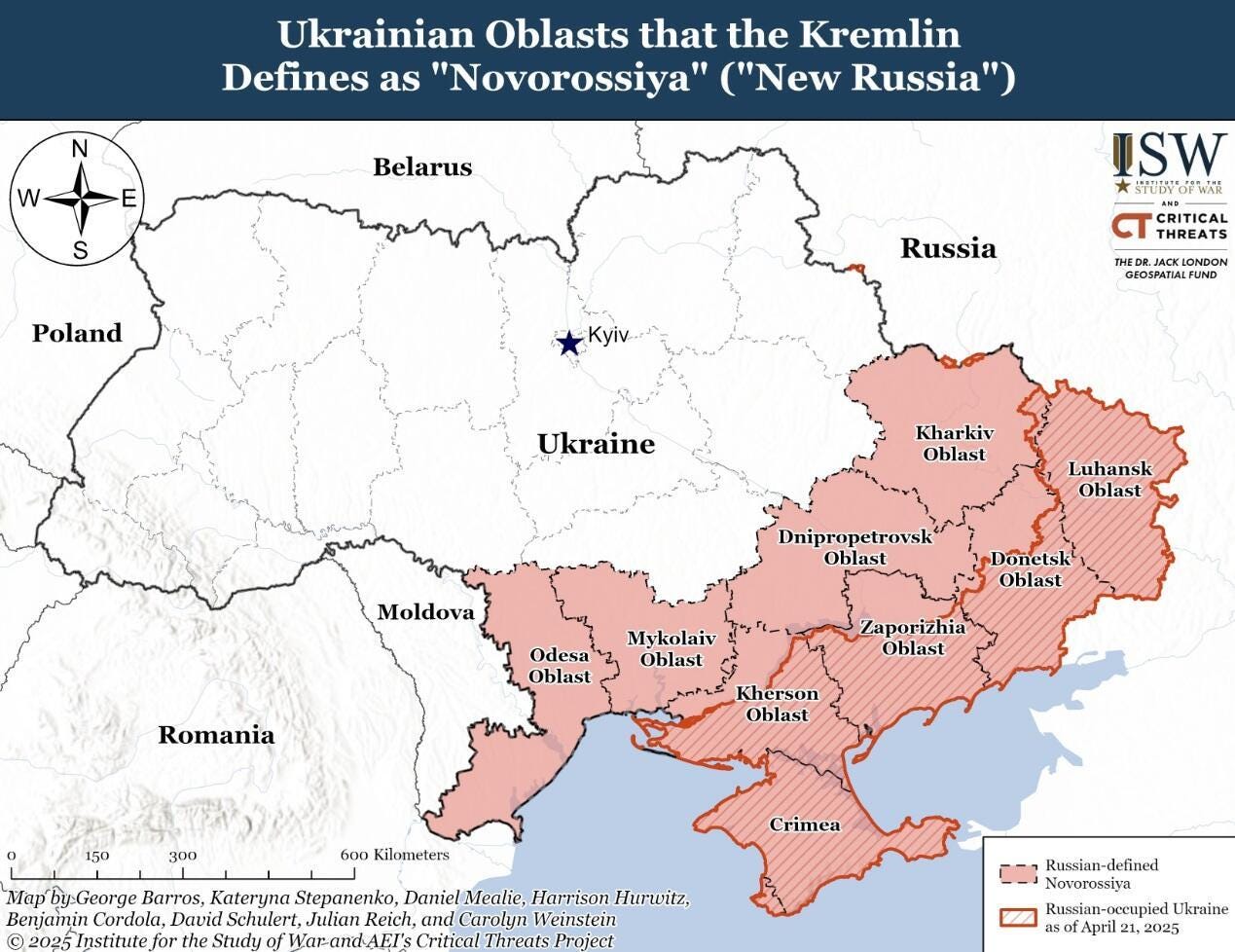
Novorossiya refers to territories gained by the Czarist Russian Empire, CRE, in 1667 (Treaty of Andrusovo), over 350 years ago. A contemporary image of Novorossiya, 2025, shows small parts of the Kherson and Zaporizhia Oblasts, on the west bank of the Dnieper, and of the two Donetsk Oblasts, are not yet liberated by Russia. Those areas became significantly smaller in late 2025 and 2026. Large areas will be added to establish a buffer zone with no Ukraine and western troops.
The ethnic Russians in these eight Oblasts likely feel as if under occupation by the Kiev regime, which is telling them 1) to speak Ukrainian at work, etc., and 2) teach Ukrainian in schools, and 3) fill-in government documents in Ukrainian, and 4) read books, watch TV and public entertainment in Ukrainian, and 5) pray in Ukraine Orthodox Churches in Ukrainian, and 6) bans their at least 600-y-old Russian-Orthodox Church. In fact, Kiev Nationalists have banned “Everything-Russian”, per Kiev diktat. How would you like it, if the US government would do this?
Former Ukrainian Prime Minister Nikolay Azarov (2010-2014) mentioned: “Rubio’s comments reveal underlying misunderstandings: ‘they’re arguing over 30-50 kilometers of space, which accounts for about 20% of the Donetsk Region.’
While this may seem minor to Americans, etc., for Donbass inhabitants it is an issue of critical importance - specifically, the region’s water supply. The 30-50 kilometers in question directly impact access to drinking water. Kiev does not want to give up that land, because it wants to control the water supply and continue its systemic neglect and genocide against the Donbass population,” Azarov explained.
“At present, water is supplied to households only every three days for a few hours. Do you understand? This is a vital issue. The key facility involved is the Seversky Donets-Donbass Canal, which provides roughly one billion cubic meters of drinking water annually to Donbass. What Rubio might dismiss as minor is, in reality, a matter of life and death for the region”. https://tass.com/world/2053239
Part III
The Entire Ukraine Area was a Part of the Czarist Russian Empire
Ukraine nationalist declared the Ukrainian People’s Republic, UPR, in November, 1917, initially as an autonomous entity within Russia, and then as a fully independent state in January 1918. The UPR claimed certain sovereign Russian lands as being part of the UPR. But, the UPR and its excessive land claims were not recognized by the Allied Powers at the Paris Peace Conference.
A civil war broke out within the UPR (1917-1921). The UPR was fighting the Reds (Bolsheviks) which won the Russian Civil War by 1921. The Reds established control over most of the claimed UPR area, defeating various Ukrainian independence movements.
The Ukrainian SSR was established and became a founding member of the USSR in December 1922, incorporating lands that were part of the former Russian Empire.
1) In the east, Novorossiya (excluding Crimea) was added by to the Ukraine SSR. Crimea was added to the Ukraine SSR by the Presidium of the Supreme Soviet in 1954.
2) In the center, most of the lands of the former Cossack-dominated Zaporizhian Hetmanate, ZH, stretching from beyond Kiev in the west to beyond Kharkiv in the east, were made part of the Ukraine SSR by the CEC in 1922
3) In the west, after WW II, the USSR gained significant territories (Galicia, Western Volhynia, Northern Bukovina, Transcarpathia) from Poland, Romania, and Czechoslovakia, which were added to the Ukrainian SSR by the Presidium of the Supreme Soviet from 1939 to 1948.
NOTE: During the Volhynia Massacre in 1943-45, units of the Ukrainian Insurgent Army (UPA), which collaborated with German Nazis, systematically slaughtered an estimated 100,000 Poles, Jews, wrong-speaking Ukrainians, Roma (aka Gypsies) and Russians. Poland officially classifies the killings as genocide. Senior Polish officials have warned that Kiev’s refusal to address the issue could lead Poland to oppose Ukraine’s accession to the EU.
How the Cossack dominated Zaporozhian Host, ZH, was Created
NOTE: This section was placed here, because the ZH plays an important part in the future of the area. With knowledge about the ZH, later parts of this article will be easier to understand.
In the 1500s and 1600s, the people south of Poland were largely the Ruthenians (East Slavs and the fierce, semi-independent Cossacks, especially the Zaporizhian Cossacks. Poland acquired these southern lands from Lithuania in 1569, as part of forming the Polish-Lithuanian Commonwealth, PLC, as below explained.
The Cossacks lived in small settlements and small towns, rode on horseback, engaged in agriculture, fishing and hunting. They were fierce defenders of their territories. Cossacks often served as mercenaries for Polish military needs (border defense, such as against Crimean Tartars). They were known for protecting the Orthodox-Christian faith and fiercely resisting the imposition of Roman-Catholic Polish rule. They resisted the attempts by Polish/Lithuanian nobilities to subordinate them, i.e., impose serfdom, control, and taxation, which led to significant uprisings against Poland and Lithuania in 1591, 1630, 1637, 1638 and 1648

Decisive Uprising in 1648: Hetman Bohdan Khmelnytsky, a charismatic leader of the Zaporizhian Cossacks, led a major uprising against the Polish nobility and pro-Polish Lithuanian/Ruthenian nobility living on their large estates in the southern lands in 1648. Many of that hated nobility and their estate managers, etc., fled to Poland or were killed.
After the 1648 uprising, Poland enacted the Compact of Zborów in 1649, by which the Cossack-dominated ZH became a semi-independent state, with defined territories. Still, much of the Cossack population remained subject to, and was taxed by, the hated nobility landowners, and 18 months later turmoil restarted.
Population: 1) mainly Orthodox-Christian Cossacks, who were mostly peasants and townspeople; 2) orthodox Christian clergy with land-owning monasteries; 3) some pro-Cossack Lithuanian/Ruthenian nobility with large estates; 4) some Russians and Belarusians, 5) some runaway serfs from Polish and Lithuanian estates, and 6) some Jews and Tartars. All desired freedom from Polish, Lithuanian and Crimean Tartar rule.
The ZH and Czarist Russia, both Orthodox Christian, had maintained diplomatic relations throughout this time. However, the Russian Czar did not support the Cossack revolts, which could have led to a war with Poland.
The ZH having been a semi-independent state from 1649 to 1654, five years, but still under threat from the Ottoman Empire and Poland, the ZH requested Czarist Russia for protection. Czarist Russia signed a history-changing treaty with the ZH in 1654.
Pereyaslav Treaty of 1654: As a part of the treaty, the ZH agreed: 1) to become a protectorate of Czarist Russia (the main danger was Poland), and 2) not to participate in talks with Poland or the Ottoman Empire without the Czar’s permission.
The 1654 Treaty of Pereyaslav was a history-altering pact where the ZH became a Russian protectorate, ending years of semi-independence from Poland. After exploring protection from the Polish Lithuanian Commonwealth and the Ottoman Empire, and finding it unsuitable, the ZH decided to align with Czarist Russia, but that inadvertently drew Moscow into direct conflict with Poland.
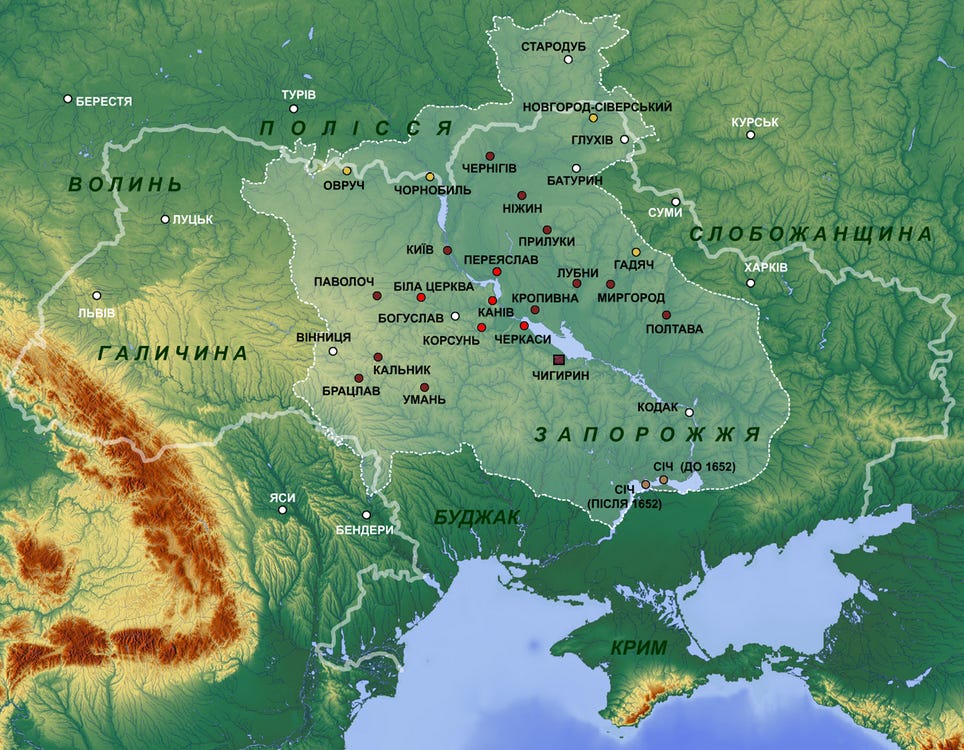
The below image shows the ZH (light green area), in 1654 (5 years after the Compact of Zborov), against the backdrop of contemporary Ukraine, after Crimea was added by the USSR in 1954; 300 years after 1654.
How Ukraine Became Russian
https://www.rt.com/russia/625106-khmelnitsky-uprising-ukraine-russia/
NOTE: The ZH land area covered the entire contemporary Central Ukraine. Some northern areas of the ZH were in contemporary Belarus.
.
.
Poland and Lithuania in 1526, BEFORE the Union of Lublin
In the next image:
Light yellow is the Kingdom of Poland, which is much smaller than the dark yellow Grand Duchy of Lithuania which had greatly expanded by routing the Mongols during the 1200s, 1300s and 1400s
The Grand Duchy of Lithuania became significantly larger than the Kingdom of Poland, particularly after its victory over the Golden Horde (Mongols) at the Battle of Blue Waters in 1362, which brought Mongol-held Ruthenian lands under Lithuanian control.
During the early 1400s, after key victories like the Battle of Žalgiris (Grunwald) in 1410, the Grand Duchy was at its territorial height. Those Ruthenian lands included mostly western and eastern Cossacks, which were Orthodox Christian.
Those Cossacks resented being ruled by the Lithuanian land-owning elites. After many uprising, they eventually formed their own semi-independent state, which was ruled by a Hetman. The ZH finally emerged as a semi-independent state about 1649. See above image.
The black area is controlled by Sweden. See below image
The dark green area on the right is Czarist Russia. See below image.

Poland and Lithuania in 1569, the year of the Union of Lublin
In the next image, in 1569, 43 years later:
As part of the Union of Lublin, Poland and Lithuanian became one state, the PLC in 1569. Poland was the dominant partner.
Poland would not agree to the Union, unless it received large southern areas (including the Ruthenian lands (mostly inhabited by Cossacks) from the Grand Duchy of Lithuania. Those areas stretched from west of Kiev to east of Kharkiv.
Poland received these areas, because the Grand Duchy of Lithuania had become too weak to defend them against the unruly, rapid-growing population of Cossacks, and others.
See above How the Cossack dominated Zaporizhian Host, ZH, was Created
The large black area was part of Sweden in 1526 (see above image), was partially annexed by Poland prior to 1569.

Some Relevant Historic Treaties
NOTE: The reason for using treaties is because official documents exist in government archives. These documents have been publicly available for hundreds of years. Many people use Wikipedia as a source of info, but contributions to that site are poorly vetted. They often present biased/false scenarios of history created by self-serving entities
The 1654 Treaty of Pereyaslav was a history-altering pact where the ZH became a Russian protectorate, ending years of semi-independence from Poland. After exploring protection from the Polish Lithuanian Commonwealth and the Ottoman Empire, and finding it unsuitable, the ZH decided to align with Czarist Russia, but that inadvertently drew Moscow into direct conflict with Poland.
Poland did not want the ZH to become a protectorate of Russia. The result was the Russia-Poland war, 1654 to 1667, 13 years, with Russia occupying the entire ZH.
Treaty of Hadiach (September 16, 1658). During the Russia-Poland war, the ZH provisionally became part of the PLC, but this union was short-lived and never fully implemented. By October 1659, 13 months later, the attempt was ended.
The Hetman Ivan Vyhovsky, who instigated the attempt, was viewed as a traitor by most ZH Cossacks and fled to Poland. This meant, the ZH remained under Russian protection, with a new hetman, Yurii Khmelnytsky.
NOTE: The PLC had aimed to make the ZH a semi-autonomous part of the Commonwealth, like a troika. The treaty envisioned a ZH with its own military, courts, and treasury. The existing pro-Cossack Polish and pro-Cossack Ruthenian/Lithuanian nobilities, with their large estates, employing Cossacks, many as serfs, would remain in place. The treaty was ultimately rejected. because it faced resistance, especially from the Eastern Cossacks, who were fervent Orthodox Christian and did not want to support the nobilities. They preferred to continue being a protectorate of the Czarist Russia.
Treaty of Andrusovo (1667). As part of peace negotiations between Russia and Poland, the ZH was divided.
The West-ZH (excluding Kiev and its surrounding land) was given back by Russia to the PLC
The East-ZH (plus Kiev and its surrounding land) remained a protectorate of Russia
Treaty of Perpetual Peace (or Eternal Peace), signed on May 6, 1686, in Moscow, between Russia and the PLC, served as the definitive legal settlement of the long-running conflict between them.
Gains by Russia: The treaty permanently ceded to Russia control over the East-ZH (east of the Dnieper River), plus Kiev and its surrounding land. The region of the Zaporizhian Sich, Severian lands, and the cities of Chernihiv, Starodub, and Smolensk were also confirmed as Russian possessions.
Gains by Poland: Poland retained control of the West-ZH (west of the Dnieper River). Russia paid 146,000 rubles in silver to the PLC as compensation for 1) the loss of the East-ZH, and 2) Kiev and its surrounding land.
In 1709, Peter the Great won the battle of Poltava, located on the east side of the Dnieper. The Swedish king Charles XII was defeated, but managed to flee with about 2000 troops, including Ivan Mazepa, the traitorous hetman of the ZH, to Bender (in present-day Moldava), then part of the Ottoman Empire. The king returned to Sweden in 1714, after 5 years in exile. He died likely from an assassin’s bullet in the head on November 30, 1718.
Mazepa, born on March 30, 1639, into a Polish aristocratic family that reinvented itself as Cossack nobility. He faithfully served Peter the Great for almost two decades until 1708, when he made a secret pact with Sweden, which ultimately led to the Battle of Poltava.
The traitorous hetman had switched sides with the aim of the ZH gaining greater independence, but he died in exile at age 70 in October 1709. Peter knew about his treason, and had appointed Ivan Skoropadskyi as hetman of the ZH, which had been a protectorate of Russia since 1654.
Mazepa was condemned in Russia as an oath-breaker. Peter the Great issued a mock award intended for Mazepa known as the ‘Order of Judas’ which featured the likeness of Judas Iscariot.
The Poltava victory marked the rise of Russia as a major European power and started the decline of Sweden’s dominance over the Baltic Sea. As part of the Treaty of Nystad, 1721, Russia gained Estonian, Livonia, Ingria and parts of Karelia, which secured trade access to the Baltic Sea for the new city St. Petersburg (founded by Peter the Great in 1703) and navy city Kronstadt.
In 1764, Catherine II of Russia annexed the eastern area of the ZH. It was incorporated as Little Russia Governorate. She appointed Pyotr Rumyantsev as Chief, in 1764
In 1775, Catherine II of Russia, as part of the partitions of Poland, annexed the small western area of the ZH (blue area in below images), that had been part of the shrinking PLC.
NOTE: During the late 1700s and early 1800s, there were several uprisings started by Roman-Catholic Polish elites with large estates in the western areas of the ZH, now a part of Russia. They tried to get the Orthodox-Christian Cossack peasants to join the uprisings, but they felt greater affinity for Orthodox-Christian Russia. Russia retaliated by putting down these uprisings and confiscating the estates of the instigators.
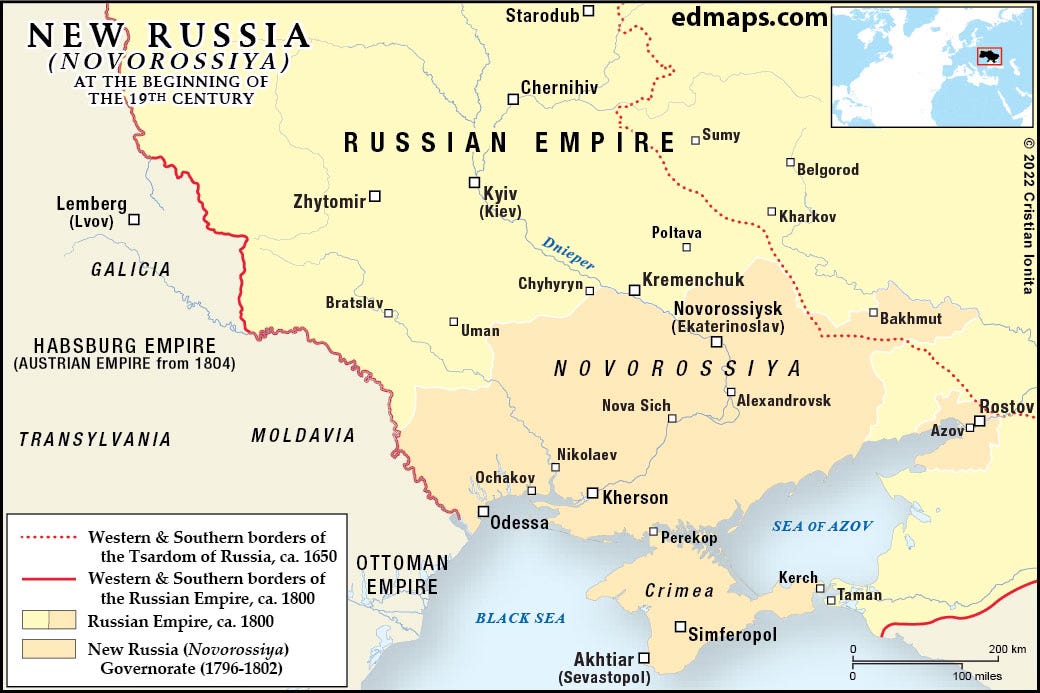
In 1783, Catherine II of Russia, after winning several wars against the Ottoman Empire, by treaty, gained the Tartar-dominated Crimean Khanate, CK, which stretched from west of Odessa and to east of Rostov near the Azov Sea, about 1600 km by land (1000 miles, the same as Boston to Chicago), and bordered in the north to Czarist Russia, which included the ZH. See fourth image (yellow) of Russia in 1800.
Partitions of Poland
After Russia annexed the eastern and western areas of the ZH, the PLC experienced a significant loss of land and people
These losses ultimately led to the three partitions of the PLC (1772, 1793, and 1795), which resulted in the complete loss of Polish and Lithuanian sovereignty in 1795
Poland, as a sovereign state, ceased to exist for 123 years, from 1795 to 1918.
The below mage shows the PLC, after the ZH (large blue area) provisionally joined the PLC in 1658.

.
The below image shows PLC after annexation of eastern part of the ZH by Czarist Russia, plus Czarist Russia annexed other PLC areas in the east and north.
Only a small area of the ZH remained with the PLC (small blue area in the southeast)
.

Novorossiya aka New Russia
Below image shows the extent of the Russian Empire and Novorossiya in 1800; it bordered on the Habsburg Empire. NOTE: Lemberg (Lvov) in the Hungary part of the Habsburg Empire is now in Ukraine.
Catherine the Great moved the border of Russia westward and southward, just as the US moved its border westward and southward, adding territories, which included Belarus, Lithuania, and the Crimean Tartar Khanate. See below.
Agreements with the Kingdom of Prussia and Habsburg Empire led to three partitions of Poland, in 1772, 1793, and 1795, extending Russia’s borders well into central Europe. See images.
Catherine the Great Expanded the Czarist Russia Empire
Catherine the Great was born as Sophie Friederike Auguste von Anhalt-Zerbst, a principality in Stettin, Germany, on May 2, 1729. After overthrowing her ineffective husband Czar Peter III, she ruled Russia from July 9, 1762, until her death on November 6, 1796.
She annexed the eastern area of the ZH in 1764, thus eliminating semi-independent rule of the eastern Cossacks.
It was incorporated as Little Russia Governorate, headed by Pyotr Rumyantsev, in 1764.
This area was part of Russia from 1764 to 1991, or 227 years
She annexed the western area of the ZH, on the right bank of the Dnieper, in 1775, thus eliminating semi-independent rule of the western Cossacks.
This area was part of Russia from 1775 to 1991, or 216 years. See above images
She annexed the CK from the Ottoman Empire, OE, in 1783.
This area was part of Czarist Russia from 1783 to 1991, or 208 years
She founded Odessa in 1794 on the site of the OE fortress town Khadzhibei.
She annexed most of eastern Poland, Estonia, Latvia and Lithuania before 1795.
These areas were part of Russia starting from before 1775 to 1991, more than 216 years.
Poland, as a sovereign state, ceased to exist for 123 years, from 1795 to 1918
The Ottoman Empire
In 1600, the OE included almost all borderlands of the Black Sea.
The Tartar dominated Crimean Khanate, CK, was a vassal state of the OE.
The CK stretched from west of Odessa and to east of Rostov near the Azov Sea, about 1600 km by land (1000 miles, the same as Boston to Chicago), and bordered in the north to Czarist Russia and the Cossack-dominated Zaporozhian Hetmanate, ZH, which had been a protectorate of Czarist Russia since 1654, until annexed by Catherine the Great in 1764 (the east part) and 1775 (the west part). All that time, and many years prior to 1654, Ukraine had never existed as a recognized, independent, sovereign state. See below image.
The Soviet Union created the Ukraine SSR in 1922; ultimately there were 15 SSRs. Ukraine did not become a recognized, independent, sovereign state until 1991.
.
For hundreds of years, the CK Tartars rounded up Czarist Russian and ZH peasants and sold them as slaves to the OE.
The local Russians/Cossacks appealed to Russia for relief.
After several Russian-OE wars, lost by the OE, most of the Black Sea borderlands became part of Czarist Russia in 1783, except for 1) Rumania, 2) Bulgaria, and 3) present-day Turkey.
The OE, by treaty, ceded the CK to Russia in 1783, 242 years ago, which put an end to the lucrative, slave-raiding business.
Odessa was founded by the Katherine the Great in 1794 on the site of the OE fortress town of Khadzhibei.
The CK gave Czarist Russia access to the Black Sea, a continuous arc from the Caucasus to Rumania.
https://www.kyivpost.com/post/7118.
The image shows the CK
.

Sweden, Finland, Russia at War, 1700-1947
The Great Northern War (1700–1721), a 21-y conflict primarily around the Baltic Sea. A coalition led by Peter the Great of Russia dismantled the Swedish Empire and permanently shifted the balance of power in Europe. The Kingdom of Sweden had controlled Finland for over 600 years, from the 12th century until 1809. Russia won. Sweden ceded Livonia, Estonia, Ingria, and parts of East Karelia, per Treaty of Nystad 1721, which increased Russia’s control over the Baltic Sea, and gave it better trade outlets for St Petersburg, founded in 1703. NOTE: Livonia was absorbed by Estonia and Latvian during 1918-1920. St. Petersburg was built on Ingria starting in 1703, while the war went on.
Finnish War, 1808-1809: Russia won. Sweden ceded Finland to Russia, per Treaty of Frederikshavn 1809. Russia renamed Finland the Grand Duchy of Finland and made it a part of Russia.
Finland declared independence in 1917. In 1918 and 1921, Finnish “volunteer” militias invaded Russia to support local populations to recover parts of East Karelia.
Finland fought two major wars against Russia:
1) The Winter War (1939-1940): After a Russian invasion, Finland ceding the Karelian Isthmus and Ladoga Karelia.
Sweden, a neutral country, was doing business with Nazi Germany before and during WW II. It had iron ore and armament supply contracts with Germany. It declared itself a non-Belligerent regarding Finland and provided to Finland significant material aid:135,000 rifles; artillery; ammo, etc.; up to 8900 military “volunteers”; a small, but effective air unit, F19, with about two dozen aircraft.In 1943, when Germany was losing, Sweden began aiding the West to be on the winning side.
2) The Continuation War (1941-1944), where Finland, allied with Nazi Germany, participated in the 872-day siege of Leningrad, with up to 1.5 million Russian dead. Finland forces, under Mannerheim, marched southeast from Finland to about 20 miles from St. Petersburg, built defensive works so women, children, old age, sick people, etc., could not escape the killing fields, and Russian troops could not be resupplied from the north, all this with near-zero Finnish casualties and other losses.
Finland, if victorious, was aiming to regain territories during the Winter War, and acquire East Karelia and Kola Peninsula, as part of a peace agreement; Murmansk, a major, ice-free Russian seaport, founded 1916, is located on the Kola Peninsula. Arkhangelsk, not an ice-free port, founded 1584, is located on both both banks of the Northern Dvina River near its exit into the White Sea in northwestern Russia.
Because Germany was losing, Finland was forced to sign an Armistice Agreement with Russia on September 19, 1944, to end the Continuation War, which imposed the following terms, including:
1) War reparations (300 million gold dollars),
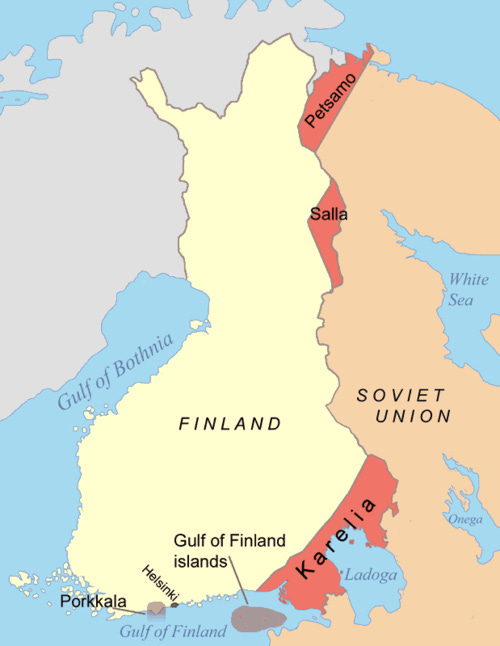
2) Territory losses; see brown areas in second image,
3) Allow a Soviet Control Commission in Helsinki, setting Finland on a path of neutrality, known as “Finlandization” during the Cold War.
If Finland had gained its “Greater Finland” (Suur-Suomi) vision during the early 20th century—and acquired East Karelia (now Republic of Karelia) and Kola Peninsula (now part of Murmansk Oblast)—Finland would be larger by 94%, i.e., slightly smaller than France.
“Greater Finland” Aspirations:
Finland’s baseline area: ~338,455 square kilometers.
Republic of Karelia (East Karelia): Adds ~172,400 square kilometers (gray)
Murmansk Oblast (Kola Peninsula): Adds ~144,900 square kilometers (purple)
Combined expansion: ~317,300 square kilometers of new territory.
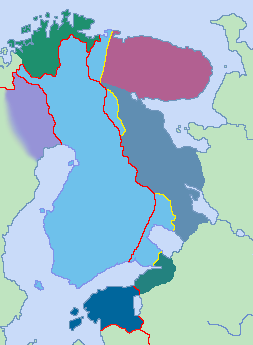
Karelia, Salia, Petsamo were ceded to Russia, as part of the Paris Peace Treaty in 1947. See next image.
The CRE in 1914 and Beyond
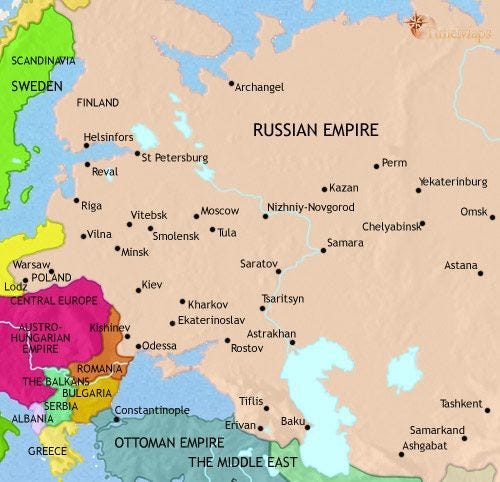
In 1914, the entire Ukraine area, including Kiev, Odesa, Kharkov, etc., plus the eastern half of Poland (annexed in 1795), Finland (annexed in 1809), Estonia, Latvia, Lithuania, the Caucasus, etc., were sovereign parts of the CRE. See image
The Kingdom of Prussia annexed the western half of Poland in 1795 (yellow)
Poland ceased to exist as a sovereign state from 1795 to 1918, 123 years.
In below image, the red part is the Austro-Hungarian Empire, which collapsed in 1918 to become two separate states, Austria and Hungary.
The 1914 map shows Finland, Ukraine, Estonia, Latvia, Lithuania, and the Caucasus as part of Czarist Russia.
Part IV
1918 - 1925, Expeditionary Intervention Forces to Reinstate Czarist Russia
The elites of the Allies, led by the US/UK, saw the new Russian government as a threat to their established commercial interests, plus, because of the post-revolution chaos, they saw opportunities to take some territory and resources from a weakened, destabilized Russia.
The EIF, about 11 nations, aimed to reinstate the Western-oriented Czarist Regime. Up to 200,000 foreign troops participated for 7 years to battle the USSR; the Reds vs the Whites. Ultimately, the Russian people, led by the Reds, defeated the unpopular Whites and the foreign EIF.
Below is a list of the Composition of the EIF
Foreign soldiers arrived and left Russia at different times during these 7 years. Even though the USSR was created in 1922, soldiers were fighting for three more years.
· 1,500 French and British troops originally landed in Arkhangelsk[41]
· 14,378 British troops in North Russia[42]
· 1,800 British troops in Siberia[43]
· 50,000 Romanian troops belonging to the 6th Romanian Corps under General Ioan Istrate, in Bessarabia.[44]: 375–376 [45]: 167–168
· 23,351 Greeks, who withdrew after three months (part of I Army Corps under Maj. Gen. Konstantinos Nider, comprising 2nd and 13thInfantry Divisions, in the Crimea, and around Odessa and Kherson)[46]
· 15,000 French in the Southern Russia intervention
· 40,000 British troops in the Caucasus region by January 1919[7]
· 13,000 Americans (in the Arkhangelsk and Vladivostok regions)[32][33]
· 11,500 Estonians in northwestern Russia[29]
· 2,500 Italians in the Arkhangelsk region and Siberia[47]
· 1,300 Italians in the Murmansk region.[48]
· 150 Australians (mostly in the Arkhangelsk regions)[49]
· 950 British troops in Trans-Caspia[6]
· 70,000+ Japanese troops in the Eastern region
· 4,192 Canadians in Siberia, 600 Canadians in Arkhangelsk[50]
· 2,300 Chinese troops in Vladivostok[51]
Epilogue
During WW II, local, Bandera-inspired, Ukrainian nationalists helped Nazi Germany with its ethnic cleansing and genocides, when Germany first swept through the Ukraine SSR from the west on its way to Stalingrad.
NOTE: During the Volhynia Massacre in 1943-45, units of the Ukrainian Insurgent Army (UPA), which collaborated with German Nazis, systematically slaughtered an estimated 100,000 Poles, Jews, wrong-speaking Ukrainians, Roma (aka Gypsies) and Russians. Poland officially classifies the killings as genocide. Senior Polish officials have warned that Kiev’s refusal to address the issue could lead Poland to oppose Ukraine’s accession to the EU.
However, the ethnic Russians in East and South Ukraine joined with the Red Army to help win the 1943 battle of Stalingrad, that turned the course of WW II.
Not surprisingly, after 1991, Ukraine has been engulfed in political civil war. Ukrainian nationalist candidates tended to get vote margins of 80% in the West/Central areas, while Russia-leaning candidates got similar pluralities in the mainly Russian-speaking East and South.
This pattern arose, because once Soviet rule ended in 1991, the deep and historically rooted conflict between Ukrainian nationalism, language and politics of the central and western regions of the country and the Russian language and historical religious and political affinities of the East and South came rushing to the surface.
Accordingly, a so-called democracy barely survived from 1991 to 2014, but the US/Europe-led/financed/organized Coup d’etat, aka Color Revolution, in Ukraine in 2014, resulted in pro-West Poroshenko as President, a Ukraine oligarch.
The illegal coup d’etat in Kiev in 2014, violently ousted the Democratically elected President Yanukovych on February 22, 2014, and caused 116 dead, plus 184 with gunshot wounds, plus 760 with bodily injury. “Mostly peaceful”, per Western Corporate Media!
The coup d’etat ended the tenuous cohesion that kept the artificial state of Ukraine intact for barely two decades after the end of the USSR in 1991.
The impending partition of Ukraine is not a case of legitimate sovereign borders being violated, as is often mentioned in Western Corporate Media.
Nor does it involve an assault on the hypocritical notion of a “rules-based international order” that has not actually ever existed but has been a convenient cover for US/EU global hegemony since 1945.
The US is at fault, because of the utterly foolish action of Washington deep state neocons during the 1990s and 2000s to bring former Warsaw Pact Nations, and even breakaway Soviet SSRs, into NATO whose mission should have ended in 1991, because the Soviet Union had disappeared.
At that point Washington should have, and easily could have, led the world to disarmament, and to a revival of the lasting peace that had disappeared in the “Guns of August” in 1914.
But now, the NATO Section 5 mutual defense commitment to these 31 nations is equivalent to a stupid charity, that the nearly bankrupt US Federal government cannot afford.
There is absolutely nothing in it to increase the enhancement of America’s homeland security, but there are huge incentives for self-serving, Russia-hating EU politicians to warmonger against Russia, rather than seek peaceful, more profitable accommodations.
So here is the historic moment: The US needs to return to the essence of the original 28-point peace plan, which is the only plan Russia likely would accept as a basis for detailed negotiation, and agree with Russia to a proper partition of Ukraine.
The US would not only end the utter stupidity of NATO’s proxy war to “weaken” Russia, but in the process accomplish something more of epic proportions, i.e., the destruction of 1) the neocons, 2) official Washington, 3) NATO, 4) the rules-based international order, and 5) all the other globalist humbug that has saddled America with $1.0 trillion per year Warfare State and Global Empire that it cannot afford and doesn’t need.
Unique cultures, languages, and people have long existed before "countries were formed." Those people, cultures, history, and languages should be allowed to separately exist without foreigners "creating" their nations. Free the people of Poland and Ukraine. I know many people in these circumstances.
Many thanks for this historical explanation of a region with lots of complex history. It will help people who have little understanding of Ukraine. The only thing many people know is what they get in the mass media in Europe and the USA and from people they may know today who live in or come from Ukraine. Often the victors in war write the history. That is not necessarily good for the people in that region. Many thanks for this substack.